
Exploring the Diverse Varieties of Chinese Tea
- Sep 29, 2025
- 4 min read
Updated: Apr 12
TL;DR: Chinese tea breaks into six main categories — green, white, yellow, oolong, red (black), and pu-erh — each processed differently to produce distinct flavours and health properties. This guide explains what sets each apart and which Cha Dynasty carries, sourced from Sophia Yang's family farm in Huangshan, Anhui.
Exploring the Diverse Varieties of Chinese Tea
Chinese tea has a rich history that spans thousands of years. It is not just a beverage, but a deeply rooted cultural experience that reflects the traditions and diverse terrains of China's landscapes.
If you are just beginning to explore authentic loose-leaf tea, the sheer number of options can feel overwhelming. However, the vast world of Chinese tea is actually categorized into six main types based on how the leaves are processed and their level of oxidation. From delicate green teas to robust, earthy dark teas, each variety offers a completely unique flavor profile, aroma, and wellness benefit.
Here is your comprehensive guide to understanding the main categories of Chinese tea, including specific varieties sourced directly from my wife and co-founder Sophia Yang’s family tea farm in Huangshan, Anhui.

The Six Categories of Chinese Tea (Plus Scented Teas)
Green Tea (Lü Cha)
Green tea is unoxidized. Immediately after harvesting, the leaves are quickly steamed or pan-fired to halt the oxidation process, locking in their fresh, vibrant green color and grassy, vegetal flavors. It is rich in antioxidants and provides a clean, focused energy boost.
Cha Dynasty Offering: We are incredibly proud to offer Yellow Mountain Maofeng (Huangshan Maofeng). Sourced directly from Sophia's family farm in the misty peaks of Huangshan, this is one of China's most famous teas, prized for its sweet, floral aroma and crisp, lingering finish.
White Tea (Bai Cha)
White tea undergoes the least amount of processing. The youngest, most tender buds and leaves are simply plucked and gently sun-dried or withered. This minimal handling results in a highly delicate, sweet, and subtle flavor profile with light melon and floral notes.
Cha Dynasty Offering: Look for classic varieties like Silver Needle (Bai Hao Yinzhen), made entirely of unopened buds, or White Peony (Bai Mudan), which offers a slightly fuller flavor.
Yellow Tea (Huang Cha)
Yellow tea is a rare and highly prized variety. It is processed similarly to green tea but includes an extra, time-consuming step called "sealing yellow" (men huang). The leaves are encased in a special material and lightly steamed, which removes the grassy astringency of green tea and creates a deeply smooth, mellow, and sweet cup.
Oolong Tea (Wu Long Cha)
Oolong is the most complex category, representing teas that are partially oxidized (anywhere from 10% to 85%). This requires immense skill from the tea master. Lighter oolongs (like Tieguanyin) are green, floral, and creamy, while heavily roasted oolongs (like Da Hong Pao / Big Red Robe) boast deep notes of caramel, stone fruit, and charcoal.
Cha Dynasty Offering: At our Kanata tea house, we frequently feature premium Tieguanyin (Iron Goddess of Mercy) for its incredibly fragrant, orchid-like aroma that evolves beautifully across multiple steeps.
Black Tea (Hong Cha)
What the West calls "black tea" is actually known as "red tea" (hong cha) in China, named after the deep amber color of the brewed liquor. These leaves are fully oxidized, resulting in a rich, bold, and warming taste that can feature notes of cocoa, malt, and dark fruit.
Cha Dynasty Offering: We carry authentic Keemun (Qimen) Black Tea, another specialty directly from the Huangshan region. Keemun is world-renowned for its smooth, slightly smoky, and wine-like fruity profile.
Pu-erh & Dark Tea (Hei Cha)
Dark tea is unique because it undergoes post-fermentation. The most famous of these is Pu-erh, hailing from Yunnan province. Pu-erh is often pressed into cakes and aged, much like a fine wine. Over time, it develops a deeply earthy, rich, and grounding flavor. It is a staple in Traditional Chinese Medicine for aiding digestion.
Cha Dynasty Offering: We stock both Raw (Sheng) Pu-erh for a more dynamic, evolving flavor, and Ripe (Shou) Pu-erh for a deeply comforting, earthy brew that is perfect after a heavy meal.
Scented Teas
While not a distinct processing category of the tea leaf itself, scented teas are a massive part of Chinese tea culture. High-quality green, white, or black teas are repeatedly layered with fresh blossoms until the leaves absorb the essential oils of the flowers.
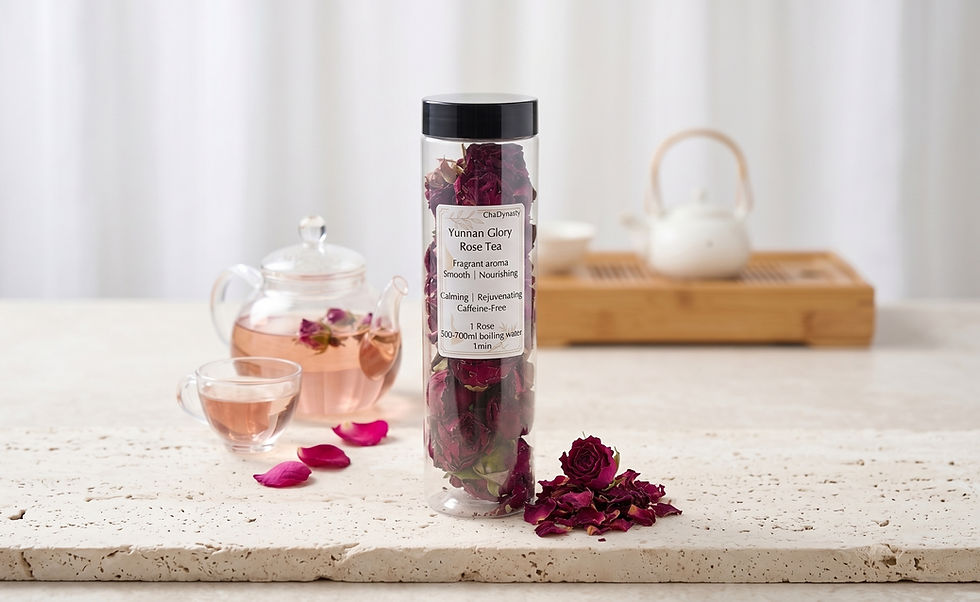
Cha Dynasty Offering: Our Jasmine Green Tea and Rose Black Tea use real botanicals—never artificial flavor sprays—to create deeply soothing, aromatherapeutic cups.
Which Tea is Right for Me? A Quick Decision Guide
Not sure where to start your tea journey? Use this simple guide based on your current needs and flavor preferences:
"I want to replace my morning coffee." * Choose: Black Tea (Keemun) or Ripe Pu-erh. Both offer bold, robust flavors and a steady, grounding energy without the caffeine crash.
"I need to focus and clear my mind for work." * Choose: Green Tea (Huangshan Maofeng). The L-theanine in green tea paired with moderate caffeine creates a state of calm alertness.
"I want something sweet, light, and refreshing."
Choose: White Tea. It has zero bitterness, a natural subtle sweetness, and requires very little effort to brew perfectly.
"I have an upset stomach or just ate a heavy meal."
Choose: Pu-erh Tea. The post-fermented nature of this tea is legendary in Chinese culture for soothing the stomach and aiding digestion.
"I want to relax and relieve stress at the end of the day."
Choose: Scented Teas (Jasmine/Rose) or a light Oolong. The floral aromatics directly engage your olfactory system to help lower stress levels.
How to Store Your Premium Chinese Tea
To ensure your loose-leaf teas from Cha Dynasty stay fresh, proper storage is essential:
Keep tea in an opaque, airtight container.
Store it in a cool, dry place away from direct sunlight.
Keep it far away from strong odors (like coffee or spice cabinets), as tea leaves easily absorb surrounding smells.
Exploring the world of Chinese tea varieties opens up a journey of taste, tradition, and wellness. Whether you prefer the spring freshness of a Huangshan green tea or the grounding depth of an aged Pu-erh, there is a tea designed for exactly what your body and mind need today.


Comments